News
|
| Have a comment? E-Mail us! |
|
News
|
| Have a comment? E-Mail us! |
|
Home
|
A Week on the Moon
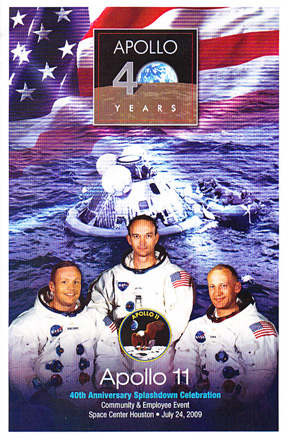
I actually started celebrating the week before, as I happened to be in Ohio on July 16 and for the first time visited the [Neil] Armstrong Air & Space Museum in Wapakoneta. It houses such cool artifacts as the actual Gemini 8 module piloted by Armstrong, his Gemini space suit, and his Apollo 11 back-up suit. After returning to Texas, I started in on my refresher crash course. Most of the films were pretty good, though not quite living up to the hype. Here's a brief summary of the programs, roughly in the order I watched them (not necessarily the order they aired): NASA--Triumphs & Tragedies: 50 Years of Space Exploration: I found this tin, 5-disc set uber-cheap at Sam's Club and thought I was getting a new documentary. It turns out to be a collection of NASA-produced films covering key missions: Alan Shepard (spelled Shephard in the accompanying booklet) on Freedom 7, John Glenn on Friendship 7, Ed White's space walk of Gemini 4, plus Apollos 11, 13, 15-17, etc. After getting used to 60s production quality, I found these to be wonderful, and by the time we get to the later Apollo coverage, the film quality is fine. Each episode is only about half an hour, so we're racing through several of these missions, but after seeing, say, footage of the actual Apollo 13 players, I'm not sure I really need to watch the feature film (great as it is) again. Definitely worth the uber-cheap price--and probably a lot more. From the Earth to the Moon: I came to this Emmy- and Golden Globe-winning HBO mini-series with high expectations. Too high, it turns out. When it's good--which is fairly often--it's very good, but the quality does sag fairly often. It gets off to a great start with the Tom Hanks-directed episode "Can We Do This?" The second episode, "Apollo One," is also effective. But then things start to go astray. "We Have Cleared the Tower" features Peter Horton--an actor I like--as a goofy documentary filmmaker covering Apollo 7. Things pick back up nicely with "1968," which contrasts the flight of Apollo 8 with some of the civil unrest in the U.S. at the time; "Spider," a great look at the development of the lunar module; and "Mare Tranquilitatus," covering Apollo 11. Then things start to go wrong again. "That's All There Is" attempts to make the anticlimactic Apollo 12 into a comedy episode. I admire the attempt but not the results. "We Interrupt This Program" is the only episode I couldn't make it all the way through. To avoid covering material already in the Apollo 13 feature film, the mini-series looks at the flight from the point of view of the news coverage. But the main conflict is between two invented journalists. Who cares? This is oddly out of place in a fact-based mini-series. Even with one of the journalists being played by Jay Mohr, whom I like, I couldn't finish this. Fortunately, "For Miles and Miles," covering Alan Shepard's return to space in Apollo 14, puts the series back on track. It's helped by the outstanding cast of Ted Levine (always good, here playing Shepard), Gary Cole, Adam Baldwin, Dylan Baker, and Tim Daly. "Galileo Was Right," about the Apollo 15 flight, is also great. I didn't look forward to "The Original Wives' Club," about the struggles of being married to world-famous astronauts, but it turned out to be okay, aided by some great performances. "Le Voyage Dans la Lune" wrapped things up with Apollo 17 while looking back on a 1902 George Melies film about men going to the moon. I'll watch parts of "From the Earth" again, but probably not the entire series. A number of episodes are very good, and the cast is top-notch, with nice performances also turned in by Nick Searcy, Kevin Pollak, Chris Isaak, Mark Harmon, Bryan Cranston, Rita Wilson, Jo Anderson, and others. Mythbusters: Moon Landing Hoax: This is always an ejoyable show, but here the team picks apart some of the major hoax theories. Not that I ever took the hoaxes seriously, but seeing how the theories don't hold up was fun. In the Shadow of the Moon: This acclaimed documentary ("spellbinding" says Roger Ebert, "stunning" says the New York Magazine, "indescribably moving" says Leonard Maltin) is solid, but by now, after all I've watched and read, I'm not as impressed as I might have been if I'd started the week with this. But it's certainly solid, and seeing a number of on-camera interviews with the astronauts is a treat. The final fifteen minutes or so are great. Live From '69: Moon Landing: The History Channel collected clips of Walter Cronkite's coverage of the Apollo 11 moon landing and aired them in this thirty-minute special. What a thrill. From CBS's crude "animation" of events unseen to Cronkite's non-slick reporting (in contrast to today's crop), this was a real joy to see. When We Left Earth: 40th Anniversary Special: Landing the Eagle: I thought this Discovery Channel special was a one-shot, but apparently there are four episodes. I saw only this one (darn!), but it is spectacular, containing some of the new, crisper NASA footage of the Apollo 11 moon expedition, and (first time all week!) recent interview clips with Neil Armstrong. I need to track down the other eps, because this is the best Apollo documentary I've seen to date. When I should have been burned out by now, this one more than kept my interest. Apollo 11: One Small Step to Our Future: Greta Van Susteren hosted this special for the Fox News Channel that spent about half of its time on Apollo 11 and the events leading up to it (including some old mission control footage that I hadn't remembered seeing in the other specials), and the other half looking at the future of NASA. The interviews with Gene Krantz and Buzz Aldrin, among others, were informative. Overall this was a solid effort, but the focus on future missions made it distinctive. Attention was paid to the debate within the NASA community as to just what future missions should emphasize. Some want to return to the moon, while others--Aldrin included--argue that the focus (for the United States, anyway) should be on manned missions to Mars. First on the Moon: The Untold Story: This aired on the Science Channel, which I didn't know even existed until recently. I don't know if this program is representative: fantastic behind-the-scenes footage and information (in this case almost exclusively about Apollo 11) presented in a kind of breathless, tabloid, oh-no-they're-going-to-die-at-any-moment tone. If one can get past that, however, this was a great special, with lots of footage I hadn't seen and facts I didn't know. The Rocket Man: This is a short story by Ray Bradbury that appeared in The Illustrated Man (and probably a bunch of other collections, too). I know, I know, it's fiction, but it's one of my favorite stories by my favorite author, and this week seemed an appropriate time to reread it, if nothing else to see how it held up. Oh my. While one can argue about the science part of this SF story, nobody--but nobody--captures the poetry and wonder (and anguish) of being an astronaut--a "rocket man"--in words the way Bradbury does. This ten-page story is absolute perfection. Read it for yourself and see if I'm not right.
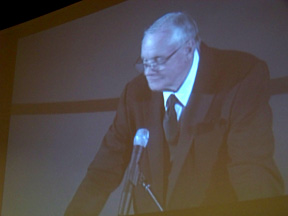
Signs made clear that the featured guests would not be available for posed photographs or autographs, so, because I was in one of the simulcast theaters, I wondered whether I could say that I've actually seen Armstrong and Aldrin "in person." I guess not, even though they were in the very same building, not fifty yards away, speaking as I watched the simulcast screen. Regardless, it finished off a spectacular week (before the Splashdown Celebration, I went on the Level Nine Tour of the JSC facilities, in which a tour guide takes a small group into areas--such as the floor of the historic mission control room--not available on the general tours). I'm already looking forward to what might be cooked up for the 50th anniversary celebration. JULY 20, 2009: Neil Armstrong Neil Armstrong is an historic individual; his being the first man to walk on the moon guarantees that. But there is something else about him that is almost as notable--or perhaps even more so: shortly after his Apollo 11 mission, when his fame was immense, he avoided the hero worship that he could have indulged in and returned to a quiet life in Ohio, teaching at the University of Cincinnati and generally staying away from the press. This has always astounding me. Hero-worship seems to be an integral part of human society, and Armstrong's accomplishments provided him with a perfect opportunity to receive the worship and turn it into some sort of personal power--political, social, economic, whatever. Heroes don't come along often--certainly not on his scale--and who could turn down such an opportunity to use that fame to attempt to Change the World? Armstrong could, it turns out. Why? I haven't gotten around to reading his official biography, but there's always been something appealing in his rejection of a media circus in exchange for his embrace of the quiet life out of the public eye. Meanwhile, his life has remained free of any significant scandal. I suspect the two are related. I don't know whether Armstrong realized this, but it seems pretty clear by now--as if it weren't before--that humans can't bear the weight of being thought of as gods. They weren't designed for that, and those who allow or facilitate it will usually flame out before their time. (I'll let you supply your own examples.) So on this 40th anniversary of the Apollo 11 moon landing, my hat is off to Neil Armstrong. Actually, my hat is off to all of the astronauts and all of NASA. Immersing myself in space-related movies and documentaries this week (refreshing childhood knowledge I obsessed over as a young space geek), I admire once again the early years of the great space adventure. JUNE 26, 2009: Michael Jackson I'll say without apology or embarrassment that I'm a fan of Michael Jackson. Clarification: I'm a fan of Michael Jackson as performance artist. I few months ago, I started re-watching a bunch of his music videos. I hate music videos on general principle, but my daughter was interested in taking dance lessons, and Jackson was the best dancer I'd ever seen (not that it's a long list), so I thought I'd show her a few, mostly the earlier ones before he started to look a little like a freakazoid. It had been years since I'd seen them and so had forgotten how astonishing they were and he was. They were more than simple music videos; they were mini-films--not just "Thriller" (obviously), but pretty much all of them. As time went on, they got progressively more complex--Michael must have been trying to outdo himself with each one--but even the simpler, early ones are engaging: the "lighted pathway" dance in "Billie Jean," for instance, is a thing of beauty. Despite the huge success of the Thriller album, I always thought Bad was the superior album, and from that sprang two of his best videos, "Bad" and (for my money) his crowning achievement, "Smooth Criminal." It's a great song and an absolutely stunning video with a nice little plot, all kinds of visual subtleties, a great musical change-up half-way through, and some spectacular choreography and dancing. It's exciting to watch even after numerous viewings. The later work brought some interesting things (notably "Earth Song" and "They Don't Care About Us"), and the seriousness of the mini-film format remained, but it was hard to focus on that when Michael himself began to look more and more like a space alien. He denied having lots of plastic surgery done, but I really don't know what naturally causes the "Thriller" nose to become the "Stranger in Moscow" nose, and even if (as it's been claimed) he had the surgery for health (breathing) reasons instead of cosmetic, he certainly had the choice to forgo the eye make-up and lipstick. What worried me more was the apparent god complex suggested in the videos, even as far back as "Billie Jean." Okay, everything he touches turns to brilliant white, and in "Beat It" he brings together warring gangs. These seem at least partly forgivable rock star stereotypes. But by "Earth Song" he is (apparently) healing the entire planet (of both real crises--war--and imaginary ones--economic development in the third world). And the teaser of his HIStory on Film Volume II DVD portrays the unveiling of a massive statue of Jackson by some sort of totalitarian regime. It's downright creepy. What kind of a person, what kind of a musical artist, puts this on his DVD collection--or okays its creation, period? A pattern was emerging by this time possibly into Michael's psyche, and it was disturbing. Unfortunately, his is not a unique story. A child prodigy gets heaped with praise, has the world handed to him, and he lets it go to his head. I fear that humans are not meant to have godlike adoration placed upon them. Could any of us remain sane, remain humble? I don't look to musicians for spiritual advice or political instruction or product suggestions. I look to them for entertainment. And in this, Michael Jackson was as good as anyone I've ever seen or heard. He was brilliant, and he died much too soon. JUNE 25, 2009: Tom Fontana's The Philanthropist Last night, NBC finally began airing The Philanthropist. I've been hearing about this series for months and wondered if it would ever see the light of day. The premise--a billionaire who goes around the world helping people--sounded far-fetched, but I looked forward to it for two reasons: (1) Tom Fontana (Homicide: Life on the Street, Oz, St. Elsewhere) was behind it, and I'll follow him pretty much anywhere, and (2) here was a show about something other than the blasted lawyers, cops, and doctors (and reality-based shows) that dominate television, and that I'm mostly bored to death with. James Purefoy (Mark Antony on HBO's Rome) stars as Teddy Rist, based on real-life Bobby Sager. Teddy finds himself caught in a hurricane in Nigeria and manages to save an orphaned boy. The event sparks something in him--including some emotional baggage from the death of his young son the year before--that causes him to risk life and limb to get some vaccinations to the orphan's village. Apparently there was some tension between Fontana and NBC about the tone of the series, with the network wanting more of an action-packed James Bond flavor. Eventually they saw the wisdom of Fontana's vision, which includes large dollops of action but without sacrificing the more serious themes of philanthropy and redemption. It may sound as if the show will be a preachy High Concept ordeal, but Fontana told Monsters and Critics, "I don't want people to think that this show is preachy, because we have really gone out of our way not to be preachy. The heart of the show is its humanity and its humor. And it is embodied in Teddy Rist....His character is so flawed that he doesn't feel he has a moral high ground to preach to anybody....This [show] speaks much more about the search in each of us to be the best human beings we can and do as much as we can." The first episode, finely directed by Peter Horton, succeeds well. All of the performances (Neve Campbell, Jesse L. Martin, and Michael K. Williams also star) are great, and the soundtrack is one of the best I've heard on TV--a World Music kind of sound by Jose Villalobos (if I'm reading the miniscule end-credits type correctly). Fontana's teleplay, based on a story by himself and co-creators Charlie Corwin and Jim Chovenin, may not rank alongside some of his classic episodes, but it's still strong, with only once or twice slipping briefly into melodrama. It's hard to say what the long-term prospects for the series are. The fact that NBC delayed the series until the summer suggests it doesn't have a lot of confidence in it, and the show--being filmed all over the world--can't be cheap to produce. Last night's episode followed a new edition of America's Got Talent and competed head-to-head with a CSI: NY rerun and an ABC infomercial about President Obama's health care plan, making it the only Big Four option for new drama. Depending on how many scripts Fontana will write, or how well his writing staff can continue the momentum of the first episode, the series will continue its good start or devolve into absurdity. Apparently eight episodes have been shot. I'd recommend catching them now while you have the chance. If the show doesn't make it past its summer run, it may be too slight for the DVD treatment anytime soon. MAY 9, 2009: Alan Moore's Small Killing I finally got around to reading Alan Moore's 1991 graphic novel A Small Killing. It seems to be the forgotten Moore GN. The new book by Annalisa Di Liddo, Alan Moore: Comics as Performance, Fiction as Scapel, doesn't mention it at all. Neither does Bill Baker's Alan Moore Spells It Out. George Khoury's The Extraordinary Works of Alan Moore gives it merely a single page in a 224-page book. All this despite Moore's saying (in Khoury's interview), "I still think A Small Killing was one of the best things I've ever done. And one of the most beautiful books that I've ever been a part of." In Moore's words, the story says "something about the gap that exists between our childhood dreams or ambitions or ideals and some of the people we end up being." Of course, the presentation of that idea is what makes the graphic novel so extraordinary. Playing with dreams, fractured memories, and a disjointed timeline, Moore builds a powerful story that works independently of the genre conventions that comprise his best-known work. If it were a movie, it would probably be stuck in the "horror" or "suspense" categories, but those hardly describe the story. The basic plot is simple enough. Timothy Hole (pronounced "Holly," he explains), British-born but working at an American advertising agency in New York City, appears to be on the rise to major success. There's just one problem: a creepy child keeps following him, apparently taunting him into dangerous situations that may end up in Timothy's death. Timothy must figure out whom the boy is and what he wants, while not getting distracted from creating a major advertising campaign of selling Flite soft drinks to the Russian market. Of course, this being an Alan Moore story, the details make the story a lot more complex. After two readings, I'm not sure I've gotten more than half or three-quarters of all that Moore is saying. But it's fun trying to figure it out. The full-color painted art is by Oscar Zarate, perhaps best known for illustrating Freud For Beginners and Lenin For Beginners by Pantheon Books. Moore raves about him in the Khoury interview. I'm more ambivalent about the art. Without a doubt there are beautiful, stunning sequences, and the storytelling is fine. Unfortunately, one of Zarate's strengths doesn't appear to be portraiture, and it's frustrating when, for instance, Timothy looks like a white guy in one panel, a black guy in the next, and then a white guy again. Things like that. I realize every artist can't be as adept as, say, Alex Ross or Adam Hughes at drawing faces, but it's distrating to the story when at times I have to stop and try to figure out whom the characters are (when mysterious identity isn't the intent). That minor quibble aside, A Small Killing is an exceptional work, and Moore fans should track it down. (For hardcore fans, get a copy of the VG Graphics hardcover signed by Moore and Zarate!) MARCH 6, 2009: Watchmen: the first epic superhero movie Last year brought The Dark Knight, probably the first Philosophical Superhero Movie. Now there's Watchmen, an even more ambitious film that ups the ante to become the first truly Epic Superhero Movie. It's a great time to be a fan of superhero movies. Being a long-time admirer of Alan Moore and Dave Gibbons's graphic novel, I had equal parts eagerness and nervousness about seeing the film, even though 300 was really cool. My plan: to go in with low expectations so as not to be too disappointed. I needn't have. What director Jack Snyder and screenwriters David Hayter and Alex Tse have given us is the Lawrence of Arabia, the Godfather, of superhero movies. An Epic. The plot, which seems to mystify newcomers, is actually quite simple. In an alternate-history 1985 in which superheroes have been outlawed, vigilante the Comedian has been murdered, and Rorschach--thinking there may be a "mask killer" on the loose--seeks to solve the crime. It leads to a fairly major conspiracy, but the gist of the plot is a murder mystery. But Watchmen has always been about much more than plot. The original comic was about--actually, it was about so many things, that a complete list would get us way off track. Suffice it to say, it was about a lot of things, to such an extent that it was often considered "unfilmable." But Snyder proved this truism wrong. He not only got the major plot points right, but he captured much of the subtleties of the story. And one of these core aspects was that Watchmen was a film about people. People (dressed weirdly, to be sure) facing real existential crises. The PR of most superhero films makes this claim, but it rarely turns out to be accurate. Watchmen succeeds. Structurally, it reveals the influence it's had on the TV show Lost (how many audience members will think it's the other way around?), in which most episodes feature specific characters dealing with their own personal struggles, while the larger island mysteries swirl in the background. Watchmen's original twelve-issue mini-series usually devoted single issues to one particular character. The overall storyline baton would, in a sense, be passed from one character to the next. This structure allowed Moore to delve more deeply into the psychologies of the characters, incorporating flashbacks (and occassionally flashforwards--again, sound familiar?) to give readers a kind of depth rare in comics. A good part of the movie presents a series of ten-to-fifteen-minute vignettes devoted to the various heroes. These are astonishingly effective, bringing emotional power to the plot that is unusual in a superhero film--or in any action/adventure movie, for that matter. In these vignettes, we learn not only what motivates the characters, but their philosophical and intellectual struggles and beliefs as well. Hence the godlike Dr. Manhattan, seeing the "behind-the-scenes" working of the universe the way a clockmaker understands the watch when he opens the back, becomes increasingly dispassionate about human life (and the entire Earth). Nite Owl is lost without his superhero identity. Rorschach seeks to live an uncompromising life in a world of evil. Silk Spectre II resents that her mom pushed her into the superhero life. Ozymandius, the world's smartest man, appears to be consumed with selling action figures of himself and teammates. Snyder weaves these stories seamlessly (again, following Moore's story structure) to create a magical experience. Several reviewers have commented on the similarity to the Lord of the Rings films, and it's a fair comparison. These are films that have allure and power--emotional power, intellectual power, aesthetic power. The cast is outstanding. Snyder has assembled a group of non-A listers, all the better. Having a "star" in this ensemble production might have been a distraction onscreen. And while everyone is good, a few performances stand out. Billy Crudup's detached, otherworldly demeanor as Dr. Manhattan is perfect, as is Jackie Earle Haley's psychotic Rorschach and Jeffrey Dean Morgan's possibly even more psychotic Comedian. Hopefully not overlooked among all the exhuberant performances is Patrick Wilson, who excels as the energetic Nite Owl in costume and the reserved, insecure Dan Dreiberg as a civilian. Despite all this praise, Watchmen isn't perfect. The violence of 300 is ramped up even more, with horrendous, bloody scenes shown in explicit detail that at times seem to go on and on. What was the point? Either Snyder enjoys such images, or they're there for some story purpose, but I'm not sure what. Sometimes it reminded me of parts of the first Blade movie, which I described in a 2002 review (Spectrum Super Special 1) as "pornographic violence" (borrowing from a David Foster Wallace essay, "FX Porn"). There are a few scenes in Watchmen in which I thought, "Okay, I get the point, move on to the next scene. Any time now. Uh, guys?" These moments generally took me out of the film instead of drew me in. As has been widely reported, the film alters the end of the graphic novel. Fortunately, unlike in V For Vendetta, which (although a very enjoyable film) replaced Moore's great ending with a stupid one, the Watchmen movie may have even (dare I say it?) improved upon the original. While the gist of the ending remains intact, the details change, and these details turn out to be in perfect harmony with the themes of the film (and the book). We'll never know, but it would be great to learn what Moore thinks of the different ending. Had he thought of it for the book and rejected it, or did the idea never occur to him? Unfortunately, he refuses to have anything to do with any of his adapted works (which also include From Hell and The League of Extraordinary Gentlemen). I could continue talking about this movie, after just a single viewing, but this review is long enough. I'll return to see Watchmen as soon as I can and look forward to the Tales of the Black Freighter DVD later this month plus the eventual release of an extended cut of the movie. In the meantime, we have this dazzling, extraordinary piece of cinema. A true epic. FEBRUARY 28, 2009: Lost and more Yesterday John Thorne commented on a few current television shows on his blog, which I enjoyed seeing and thought was a good idea, so I'll do the same thing here: Lost: Both John and I are obsessed with the show. Before season four began he re-watched the entire previous three years. I didn't have time but am now re-watching episodes here and there, usually concentrating on a particular character (first it was Desmond, followed by Sawyer, Jack, Kate, Sayid, and Locke). It appears that the sixth and final season of the show will be dominated by the Widmore-Linus war. Lots of people have been debating which side has the Good Guys and which side has the Bad Guys. Such an easy division would play into television conventions. But Lost is increasingly unconventional as time goes on. What if both Charles Widmore and Benjamin Linus are the Bad Guys, and the castaways have found themselves stuck in the middle of this all-out struggle, unwilling to commit to either side, with both Widmore and Linus trying to manipulate them in order to gain an advantage? Wouldn't that be a much more interesting, complex, and challenging way to go? Just a thought. Dollhouse: The series is getting off to a better start than Firefly did but not as good as Buffy. Being a fan of Joss Whedon, I'll stick around. Eliza Dushku was fantastic in Buffy, but how much of a range does she have as an actress? Turns out she has quite a wide range--she can play much more than the kick-butt female warrior. Cool. Chuck: I've been hearing about how good this show is. One night I caught the last few minutes before Heroes started and was amazed at how bad it was. Everything had a lousy sitcom feel: boring lighting (just flood the set with lights so every camera angle works), overacting, terrible dialogue (you could see the "punchlines" coming from a mile away), and predictable storytelling. Being a fan of Adam Baldwin since way back in the My Bodyguard days, I decided to give the show another chance. The following week I started watching from the beginning and couldn't take it after about ten minutes. Ugh. Hell's Kitchen: My guilty pleasure show that I started watching last year. I don't know anything about cooking. I pretend that I'll learn something by watching. Of course I won't. But I can't pull myself away. FEBRUARY 24, 2009: Twenty Years Ago On February 24, 1989, shortly after midnight, Laura Palmer was murdered. The next morning, her body washed up on shore. It was found by Pete Martell, who notified Sheriff Truman by stating, "She's dead. Wrapped in plastic." Soon, FBI Special Agent Dale Cooper was called in to lead the investigation. Of course, I'm referring to Twin Peaks, the groundbreaking television series that aired on ABC. The 1989 date was when the show's events transpired, not when the episodes aired (from April 1990-June 1991), but 2009 still counts as a twenty-year anniversary in my book. In 1992, following the release of the prequel feature film Twin Peaks: Fire Walk With Me, Win-Mill Productions (i.e. Craig Miller and John Thorne) began producing Wrapped in Plastic magazine, and kept producing it more-or-less bi-monthly until 2005. So here we are, twenty years after the fictional death of LP and almost eighteen years (!) after the actual death of the short-lived TV show. After producing seventy-five issues of WIP, there may not be much left to say, and yet I feel compelled to say something. To be honest, I don't go back and watch the episodes much at all. (It didn't help that they weren't released as a single DVD set until, what, a year and a half ago?) I occasionally go back and watch Homicide and Buffy, but not so much TP. I'm currently watching and re-watching (and re-re-watching, when I have a few spare minutes) episodes of Lost. It's not that I wouldn't enjoy Peaks, but for me David Lynch really kicked it into high gear creatively after the TV show was done. FWWM was a stunner (don't believe the early negative reviews) and made much of the TV show pale by comparison. (I have, by the way, gone back and watched FWWM quite a few times.) Lynch followed that with Lost Highway, which I didn't start to like until about my third viewing and now consider it fantastic. After a slight detour with the (brilliant) Straight Story, Lynch produced the greatest film of his career, Mulholland Drive. These films dealt with many of the same themes as TP, but in a much more accomplished manner. This is not to denigrate Peaks in any way, but to acknowledge that Lynch--a filmmaker--was working in a medium, TV, that really did not suit him. The amazing contributions of Mark Frost, Harley Peyton, Bob Engels, and others provided a way for Lynch's film sensibilities to be translated into a television format, with the result being a stunning program. But once he returned to film, Lynch exploded with a creativity that was already strong with pre-Peaks work. It was always a little curious to hear fans want Lynch to return to produce another Peaks project--especially when many of those fans complained about FWWM. They couldn't see that he was moving in new directions and had no interest in looking back. (Surely if he had created another TP film, those fans would have disliked it as much as, if not more than, they disliked FWWM.) In the past few years it's been easy to see TP's place in the development of Lynch as a filmmaker, just as it's interesting to see its influence in some of the greatest television of the 90s and 2000s. David Chase of The Sopranos and Joss Whedon of Buffy, Firefly, et al. have acknowledged the impact of Twin Peaks. Damon Lindelof has said that TP is a huge influence on Lost. In a Q&A transcript that appears at CHUD.com, he says, "The show that really affected me, however, was Twin Peaks, which I'd watch every week with my dad. He'd tape the show on his VCR (remember those?), and we'd watch the episode again right after it aired in our quest to pull every last clue out of the show. The idea of a TV show being a mystery and a game that spawned hundreds of theories obviously was a major precedent (that's a fancy way of saying we ripped it off) for Lost." Though Twin Peaks had its weak moments in the second season (not as many as its detractors claim, but it's true that by TP's standards it did), it was a phenomenal accomplishment and remains in my top five favorite television shows of all time. Now, a moment of silence for Laura Palmer. FEBRUARY 23, 2009: John Thorne's Blog! John Thorne, one-half of the Wrapped in Plastic and Spectrum team, has started his own blog! It's not limited to Twin Peaks or David Lynch-related items, but covers a variety of subjects. Be sure to check it out here. Craig Miller, the other half of WIP and Spectrum, does not have a blog. But when he does have something to say, he'll write it here in the Win-Mill news section. Like the "Twenty Years Ago" piece that will follow tomorrow, and the David Foster Wallace appreciation that will be along some time afterward.... JANUARY 22, 2006: Happy Birthday, Robert E. Howard Robert E. Howard, the greatest pulp writer in the "whole wide world" best known for creating Conan, Kull, Solomon Kane, Bran Mak Morn, and Breckinridge Elkins, was born January 22, 1906, exactly one hundred years ago. Though dismissed in many literary circles as a writer of frivolous sword-and-sorcery stories, his popularity endures because of the raw power of his work. Fort Worth hosted a 100th Birthday Celebration yesterday as fans gathered to celebrate his work, read selections from many of his writings (writings that are much more diverse than just Conan-like stories), and raise money for the Cross Plains Fire Relief Fund. One of the fires that raged across Texas recently devastated Cross Plains, where Howard lived most of his life and wrote all of his stories. His house, turned into a museum, was almost eliminated by the fire--in fact, the fire stopped just a few yards from the structure! From what we're told, most of the other nearby homes were lost. If you would care to contribute to the relief fund, here's the address: City of Cross Plains Fire Relief Fund, c/o Texas Heritage Bank, PO Box 699, Cross Plains, TX 76443. Apparently a PayPal account is also being set up, but we don't know if that's happened yet. Obviously we'd love for you to purchase one of our REH-themed Spectrum Super Specials in honor of Howard's birthday, or one of the new DelRey books collecting the REH material in its pure form. Or watch The Whole Wide World, the extraordinary film starring Vincent D'Onofrio and Renée Zellweger. But at the very least, pull out a REH story and enjoy it all over again (or maybe read one for the first time)--perhaps "Red Nails" or "The Tower of the Elephant" featuring Conan, or "Red Shadows" with Solomon Kane, or "The Valley of the Worm," or "Pigeons From Hell," or some of Howard's haunting (and underrated) poems, or, well, you have your own favorites. (Craig read a nice little tale, "For the Love of Barbara Allen," for the first time.) You won't regret it. Rest In Peace, Robert E. Howard. JANUARY 19, 2006: Heath Ledger, Eli Roth, Heather Graham interviews Three names that have been in the news recently--Heath Ledger for his acclaimed role in Brokeback Mountain, Eli Roth for writing and directing the #1 horror movie of a few weeks ago, Hostel, and Heather Graham for returning to television in Emily's Reasons Why Not--have been featured in previous issues of ours! Ledger's interview appears in Spectrum 26. Roth's interview appears in Wrapped in Plastic 50. And Graham's interview appears in WIP 24. The issues are from a few years ago, so of course the current projects are not discussed, but if you are a fan of these folks, pull out those back issues. If you don't have copies, they're still available in our back issue sections, so order now before they're gone! Speaking of which, our supply of WIP 56, containing our lengthy interview with Naomi Watts, is getting very low. If you've been procrastinating ordering a copy, you'd better do it soon, or you'll miss out! JANUARY 19, 2006: WIP on Cinescape.com Our thanks to Jason Davis, who writes a very complimentary piece on Wrapped in Plastic ("an excellent gateway to some other televisual delights [besides Twin Peaks and The X-Files]") and "its equally brilliant sister magazine Spectrum." Check it out at www.Cinescape.com. NOVEMBER 12, 2005: Spectrum Super Special 3 is here! Believe it or not, our second Robert E. Howard-themed Spectrum Super Special, volume 3, is finally out, over a year in the making! It grew to 144 pages (well over the 104-page SSS 2 that featured Conan), and when you see the contents, you'll understand why. Initially conceived as a mostly-reprint publication, it ended up containing almost all new material. Conan and REH fans won't want to miss this! For details about the volume, click here. AUGUST 15, 2005: Neil Gaiman added to Following Cerebus line-up! Following Cerebus 5 is at the printer and will ship out next week (keeping our fingers crossed) or the week after, meaning it should appear in stores either the last week of August (keeping our fingers crossed) or the first week of September. Our goal is to have this magazine arrive in the early or middle part of its release month, not at the end, and we may have been able to make this goal this time if we (once again) hadn't gotten carried away and expanded the issue to 56 pages (it was designed as a 40-page issue). Late in the game, we were able to add a Neil Gaiman interview (to an issue already boasting Chester Brown, Joe Matt, Frank Miller, Paul Pope, Andy Runton, Seth, and Craig Thompson!), so we figured the extra week or two was worth it. But, really, guys, we've got to control ourselves and keep future issues to 40 pages so that we can meet our budgets and keep the mags coming out on time. Issue 6 will be a Cerebus-centric issue ("finally!" we can hear many of our readers saying) with a look back at "the many origins of Cerebus." FEBRUARY 10, 2004: Cerebus graphic novels are here!
The books themselves will ship out of Canada (where they are printed). If you order the graphic novels along with magazines, the mags will be mailed separately from our Texas office.
If your tastes are anything like ours--and they probably are, if you've been reading our publications over the past decade and also enjoy Twin Peaks, Buffy, Homicide, American Gothic, Xena, Mulholland Drive, Eyes Wide Shut, and/or Alias--then we're confident you're going to love Cerebus! Click here to get to our Cerebus graphic novel page. JANUARY 3, 2004: Following Cerebus
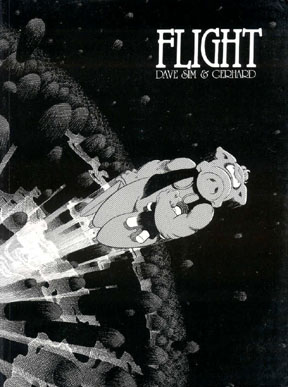
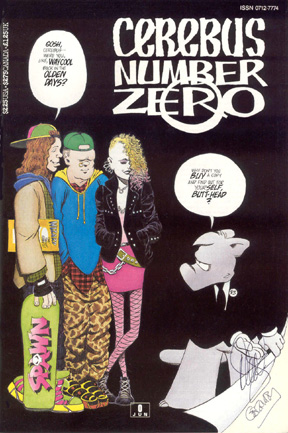
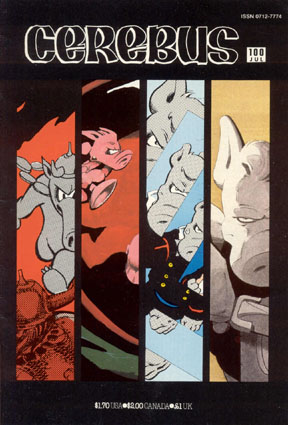
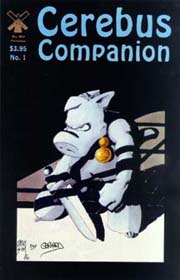
In 1993 and 1994, Win-Mill Productions published two issues of Cerebus Companion. Sales were good, and we had a blast putting them together, but for a variety of reasons issue 3 never came out. With Following Cerebus, we look forward to returning to writing about a comic book series that we have been reading for twenty-five years. Readers of our other publications should have a good idea of the kinds of material that we produce, and therefore a good idea of what will appear in Following Cerebus. We--and contributing writers--will be examining this groundbreaking series and discussing where it succeeded, where it may have failed, what inspired its various storylines, how it influenced the industry, and anything else that would make for interesting reading. Frankly, because the massive storyline makes even Twin Peaks seem rather simple by comparison, we're not sure at this moment what all future issues may contain. We're certain, though, that there will be no lack of subject matter. The comic book and Dave Sim himself have created a number of controversies, and eventually we hope to be able to discuss all of them. One notable change from the way Wrapped in Plastic is produced is that Sim has agreed to be a much more active participant with Following Cerebus than David Lynch is with WIP. Sim will be making himself available for regular interviews and will be providing rare and unpublished writings, correspondence, Cerebus out-take pages, photographs, and anything else that he believes might be of interest to fans. We will incorporate this material into future issues as space allows. We will have many more details to release in upcoming weeks. (Right now, we're scrambling to put the finishing touches on WIP 68, which is running late.) Keep checking back at this site for regular updates.
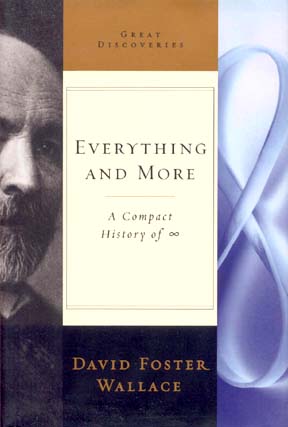
DECEMBER 12, 2003: New David Foster Wallace book!
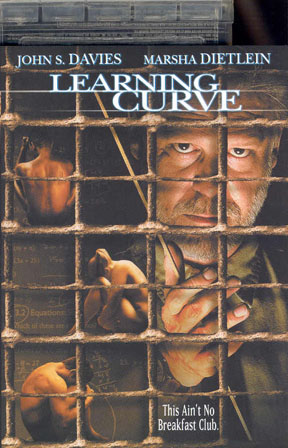
Some of us are still making our way through the book, and while the math contained within is presented clearly, readers may have to dust off some of the parts of their brains that haven't been used since those high school math classes. Nevertheless, the rewards are well worth the effort. With Wallace's typical wit (and, as usual, extensive and entertaining footnotes) in predictably fine form, the three hundred pages are never dull. If you're in the mood to read something that's both entertaining and challenging this holiday season, you should definitely consider Everything and More. (If you'd prefer something that's entertaining but not as challenging in the math department, you can't go wrong with Wallace's extraordinary 1997 collection of essays, A Supposedly Fun Thing I'll Never Do Again.) DECEMBER 12, 2003: Conan What with the upcoming new Conan series by Dark Horse just around the corner (the preview issue by Kurt Busiek and Cary Nord was spectacular), 2004 is looking to be a real treat for fans of Robert E. Howard. As fans ourselves, we were pleased and honored when the official Conan Web site, www.conan.com, contacted us and asked permission to reprint a portion of our Spectrum 34 interview with Mark Schultz. Check out the site for all the latest news regarding everyone's favorite Cimmerian! NOVEMBER 7, 2003: Greatest film director you've never heard of Let's face it: the new television season (with a very few exceptions) is the worst in years. So use the extra time to pick up a spectacular movie you've never heard of by a spectacular writer/director you've never heard of: Learning Curve by Andy Anderson. (Not Anthony Anderson; that's a different guy.)
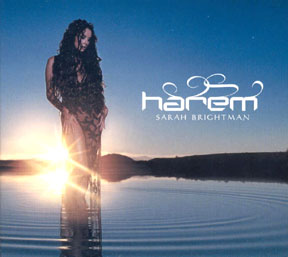
What makes Learning Curve especially extraordinary is the writing. As with all of Anderson's films (both his features and his shorts seen at film festivals and special screenings), every scene, virtually every line, is precise and often multi-layered. There are no wasted scenes or dialogue in an Anderson movie. Such exactness is rare--one might think of Tom Fontana (Homicide, Oz) and Joss Whedon (Buffy) in television or Charlie Kaufman (Adaptation) in film, and we know there are others here and there--but Anderson is equal to all of them. You haven't heard of him because for twenty-five years he has been working outside the Hollywood mainstream in Fort Worth, Texas, turning out one independent masterpiece after another, and for most of that time teaching at the University of Texas at Arlington. (He is currently chairman of the Department of Art and Art History.) For years, some of us in the Dallas/Fort Worth area have known what a brilliant filmmaker he is. With the release of Learning Curve (and Positive I.D. a few years ago), everyone can know. An additional treat of the DVD is a full director's commentary--and we mean full. Anderson talks non-stop (not even bothering to introduce himself at the beginning, but jumping right in discussing the opening sequence) about all aspects of film production--acting, character arcs, story structure, editing, lighting, camera movement, and on and on. Here Anderson's teaching background comes in handy, and listeners will get a full semester's worth of insights for the price of one DVD. For years we've been wanting to write a Spectrum essay about Anderson's works but held off because of their lack of wide distribution. With the release of Learning Curve, we can begin writing for the next issue. Do yourself a favor: pick up a copy before then and check it out--think of it as a (friendly) homework assignment. (If it's not available in your area, order a copy from amazon.com or our favorite DVD site, Deep Discount DVD.) The film is rated R, and there's no question it deserves that rating, so send the kids off to bed and settle in for an intense film experience. Disclaimer: Spectrum co-editor Craig Miller studied film under Anderson at UTA years ago, so he may not be altogether unbiased in approaching these films. On the other hand, he's also had many years to reflect on the work and consider whether it holds up in light of all the television shows and movies he's had to review. It does. Check it out, and see if he's not wrong in calling Anderson one of today's greatest filmmakers. JULY 22, 2003: New Buffy mags! Not only is Spectrum 33 finally out, but we've managed to obtain a few Canadian T.V. Guides with Sarah Michelle Gellar on the covers! Click here to get to our Buffy Magazine Sale page! JULY 17, 2003: Who is Sarah Brightman? We’ve made no secret that we’re far from experts on the current music scene. Television, we know well. Comics, we know well. Movies, we know almost as well. But as for current music trends—well, lets talk about television or comics instead. We love music, but a moment of clarity came a couple or so years ago when our new issue of Rolling Stone came in the mail and, scanning the list of top ten singles, we couldn’t identify even one song on that list. So maybe this is a stupid question and we’re the last to know the answer, but: Who is Sarah Brightman?
Wow. We have no idea whether this is indicative of her earlier work (her bio suggests that it’s somewhat of a new direction), but it’s an amazing mix of world music, pop, and “New Age.” On several tracks (including the title track and “What You Never Know”), you’d swear you’re hearing a new Kate Bush song (who hasn’t released a CD in eleven years; Kate, come back!), right down to the piano on the latter. “It’s a Beautiful Day” sounds like an Enigma track (no surprise; Brightman’s producer and collaborator Frank Peterson used to work with Enigma). “You Take My Breath Away” is reminiscent of Enya (or, more precisely, Maire Brennan). Other times, one can hear sounds that recall Loreena McKennitt or Howard Shore’s Lord of the Rings soundtrack or Sting’s “Desert Rose.” We bring up these parallels to give the uninformed (such as ourselves) a basis for comparison: if you like those other artists, you’ll like Harem. We do not mean to imply that Brightman does not have her own unique style. For example, her excellent rendition of the Louis Armstrong classic “What a Wonderful World” retains just enough of the original, yet remakes it into something completely new. In “The War is Over,” she performs a duet with Iraqi vocalist Kadim Al Sahir. His verse is not translated in the lyric booklet (which is a little disappointing), but it doesn’t affect enjoyment of the song; his voice is so beautiful that it is a treat to hear. The CD is filled with many treats. The Middle Eastern influence dominates to give the album a cohesive feel, yet each track is distinctive and enchanting. Brightman’s soprano voice is strong and clear (sounding a bit like the aforementioned Kate Bush without the other musician’s occasional girlish qualities that annoy some and fascinate others). The CD comes in a regular edition and a special edition with a bonus DVD. This extra disc includes two versions of the “Harem” music video, a documentary, a photo gallery, a biography, and more. For the extra few dollars, it’s well worth the price. MAY 21, 2003: Adios Buffy, et al. So Buffy is gone, if not forever then at least in its current incarnation. Bummer. We'll have a lot to say about its final season in the upcoming Spectrum 33 (and more to say about Buffy in general in later issues), but for those who can't wait, we'll just mention here that we found the finale engaging, though not extraordinary in the way the finales to Homicide: Life on the Street, Twin Peaks, and American Gothic were. The battle against the Ubervamp army was somehow thrilling and anti-climactic at the same time, while the "empowerment of women" thing seemed a little heavy-handed. And since we already knew that Spike was returning in the fall on Angel, his final scene didn't have the power it otherwise would have. On the other hand, Joss Whedon's use of clever dialogue and directing skills were as sharp as ever. Overall, a solid episode. (As always, we reserve the right to change our opinion about any or all of this when writing the actual review for issue 33. It wouldn't be the first time....) Our sadness regarding the end of Buffy is part of a larger realization that all the great fantasy shows of the nineties that we followed are now gone. Within the last couple of years, The X-Files, Xena: Warrior Princess, Hercules: The Legendary Journeys, and now Buffy have been canceled. There were also the enjoyable one-season wonders such as as the aforementioned Gothic and The Queen of Swords, plus oddities such as The New Adventures of Jules Verne. The more recent entries are okay (Andromeda, Mutant X), but they haven't hooked us in as the other ones did. Angel and Smallville are pretty much left standing alone, and while they are good (and occasionally great), they rarely reach the heights that XF, Buffy, and even Xena occasionally attained. So far we haven't seen much in the way of new shows to look forward to in the fall, except for the Elisha Dushku offering on Fox (Tru Calling)--the premise makes the show sound absurd (a time-traveling morgue assistant), but we'll watch Elisha in anything. The WB has Fearless, which looks snazzy from the commercials--but then, so do most dramas. Syndication could usually be counted on to provide at least one new excursion into bizareness, but we haven't heard yet what will be provided this year. We'll have to wait and see. Until then, we have lots to write about Buffy, which will make for an enjoyable summer. MAY 1, 2003: Buffy, Angel, and Fastlane For months we've been trying to figure out the relationship between the Buffy and Angel storylines. It's not that they necessarily needed to relate; we just assumed that they eventually would. While the First Evil attacked Sunnydale, Angel and the gang in Los Angeles faced some sort of apocalyptic menace that blotted out the sun. It wasn't a stretch to think that these two Joss Whedon shows would tie together somehow. Perhaps in re-watching all the episodes back-to-back, things will become obvious that aren't obvious on a week-to-week, month-to-month basis. But things may be coalescing. Surely it's not coincidental that Buffy features an evil priest as the prime disciple of the First (the Anti-Christ and the Beast, so to speak), and Angel has a goddess-like character promising peace in exchange for one's soul (or free will, to be more precise). At times these play like an expression of Whedon's anti-religious views (which he hasn't hidden), while at other times they seem to explore core issues of religious faith. Presumably all will be made clear by season's end (which comes sooner for Angel than for Buffy). Whatever the case, both shows have been on a roll recently. A couple of Angel episodes highlighting Fred (Winifred) made the character extremely interesting for the first time (we'd pretty much given up on that ever happening). Meanwhile, Buffy has become a weekly tour de force. Tuesday night's episode, "Empty Places," appears to have been written at a time when the producers still hoped that they could talk Eliza Dushku into starring in a spin-off Faith series. Knowing that that will not happen blunts the impact of the episode somewhat, but the scene of the Scoobies essentially kicking Buffy out of the group is wrenching (and, in the way that only Buffy is able to pull off so brilliantly, parallels the real-world developments on the show, in which Sarah Michelle Gellar appeared to be separating herself from the series). Like many other fans, we are disappointed that the series is coming to an end. At the other end of the spectrum--well, not really; we don't bother with shows at the other end of the spectrum--is Fox television's Fastlane. Does anybody else watch this? Based on the Nielsen ratings, apparently not. We don't watch it obsessively, but we know that Peter Facinelli and Bill Bellamy are these young, attractive, adventurous cops hired by Tiffani Thiessen (!) to solve crimes by dressing in hot clothes, driving fast cars, and getting in lots of slow-motion gunfights. The suped-up, bold color schemes (none of those Miami Vice pastels!) give the show an undeniable visual flair, and by the time you throw in interesting guest stars (such as Jay Mohr or Oz's Kirk Acevedo), it all becomes pretty addictive. The early speculation is that the show will not return, which is a shame. There's nothing else quite like it on television, and after wading through all the "reality" shows, "serious" crime and law dramas, dopey sitcoms, and news magazine shows, a fantasy cop series that doesn't take itself too seriously (but also avoids descending into camp) is a nice break. APRIL 18, 2003: Greatest "reality programming" ever Last night the Fox News Channel returned to its normal lineup. Bummer. For three weeks it had the best reality programming ever. Who cares who gets voted out of Survivor when you can watch live reports from Rick Leventhal or Oliver North with the troops in Iraq? We mean no disrespect toward the troops. For them, the situation at hand was serious, and miscalculations could result in capture, major injury, or death. The reason the U.S. military is the best in the world is because of the superior men and women in the armed forces. For them, the accompanying "embedded reporters" did not make the soldiers part of some "reality TV" show. If anything, the soldiers probably saw the reporters as one more nuisance. War is difficult enough without having some untrained guy with a videophone tagging along, perhaps just waiting for you to slip up in the heat of battle so that he can win his Pulitzer.
The next morning, you could turn on the news, and the war coverage is still going, like some never-ending Jerry Lewis telethon. Soon, there's another Pentagon briefing, and more analyses of troop movements, and before you know it, it's night again, but in Iraq it's morning, and the cycle begins all over. Who can resist? Fox News in particular had a great cast. Former Marine North could talk the talk while interviewing the troops, while Leventhal was the Everyman that every great story needs--a guy we could relate to who could be our eyes and ears. From Centcom in Qatar came reports from Mike Tobin, a bodybuilder-looking guy squeezed into reporter clothing. Meanwhile, former war protester Geraldo Rivera alternated between hard news (a little too hard at one point, getting himself in trouble for drawing troop movements in the sand) and cuddling up to the troops with schmaltzy sentimentalism and a renunciation of his earlier views. Back in the U.S., the late-night report was often headed by Brian Wilson--the prototypical authoritative news anchor (without the snide sarcasm of Peter Jennings and Dan Rather)--and Laurie Dhue, a captivating blonde who seems too smart to be dismissed as a mere "infobabe," but is still, well, a captivating blonde. Suddenly a report will come in from, say, Jennifer Eccleston, and guys in the audience don't really care what the news is, as long as she keeps talking. But then we're back to Bret Baier with an update from the Pentagon, and finally over to Col. David Hunt, who will detail the ins and outs of the military strategy. On and on it goes in a never-ending stream, and one must keep remembering that in Iraq it's not a TV show, but a fight for a safer world. But in the U.S., it's the greatest reality programming ever. Now it's over, and we're back to late-night reruns of The O'Reilly Factor, Hannity & Colmes, and all the rest. The short period of conflict is great for the soldiers, great for the Iraqis, and great for the security of the free world, which we'll take any day over better television. But for a while, the coverage set the standard for reality programming, and we already miss it. MARCH 6, 2003: Angel - March 6: "Salvage" This is more like it. In a season in which we have become increasingly bored with this series (was Jeff Jensen serious when he wrote in the March 7 Entertainment Weekly, "Angel has finally found its creative wings"?), Faith (Eliza Dushka) re-enters the scene and helps save the day--both the danger facing Wesley and the gang in Los Angeles, and the show itself. The problem with the series has been that it has strayed from a central theme--that Angel is a vampire who also has a soul. Both of these elements are necessary to make the character--and the series--interesting. Without them, it became just a generic save-the-world-from-the-monsters drama little better than some syndicated affair. Weeks would go by with never a vampire in sight. It's not that we're obsessed with vampires per se--Buffy can succeed without them--but for Angel, the character's identity is bound to the part of him that is vampire. Metaphorically, it's the part of every person that is out of control, self-indulgent, and evil (a more dramatic version of the Dr. Jekyll/Mr. Hyde, or Bruce Banner/the Hulk theme). When this is forgotten, Angel is just another guy out there fighting the bad guys with his friends. (As a side note: this is why Welsey has been, by far, the most interesting character on the show since the latter part of the third season. The duality of his character has been emphasized.) The return of Angelus brought the vampire element back into focus, and now the return of Faith brings back some good ol' slam-bang action. In this David Fury-scripted episode, her conflict with Connor seems natural and unforced, while her teaming with Wesley (Alexis Denisof) is both amusing and ironic. When Wesley first arrived in Sunnydale (in the third-season Buffy episode "Bad Girls"), he was assigned to be her (and Buffy's) Watcher. When she "went bad," he considered it his failure--something she (and others) didn't let him forget. Now she's back, teamed with him again, and their history together makes it a fascinating pairing. There is one frustrating element to Faith's return: the realization that there could have been a Faith spin-off series, but that Dusku turned it down in favor of a Fox series, Heroine. It would have proved that, as much as we love Sarah Michelle Gellar, the Buffy world could have survived, even thrived, without her. The Chosen One concept is strong enough to allow for multiple interesting characters, and Faith is as strong a personality as Buffy (unlike, for instance, the collection of Slayer potentials currently assembled on the Buffy series, though in fairness, perhaps they're supposed to be dull by comparison). For now, we'll enjoy her upcoming appearances on Angel and Buffy. FEBRUARY 26, 2003: Adios, Buffy TV Guide Online announced this morning that Sarah Michelle Gellar has decided not to return for an eighth season of Buffy the Vampire Slayer this fall but will instead begin shooting a feature film, Romantic Comedy, in August. Also, a rumored spinoff starring Eliza Dushku as Faith will not happen, either, as the actress has decided to star in a Fox pilot, Heroine. UPN and Twentieth Century Fox have yet to comment, though Joss Whedon has previously considered continuing the series without Gellar (with, presumably, a change in the title). While the news is disappointing, it's not a surprise. This season, while still highly entertaining, has given us the impression that some of the actors and creative personnel lack a kind of energy that was present in previous years, especially the fifth and sixth seasons. Nevertheless, we would love to see a revamped show as long as Whedon continued to be in charge. There are a number of interesting directions that such a series could take if the will were there. TV Guide Online also noted that David Boreanaz will make a guest appearance on Buffy in May to bid farewell to the Chosen One. FEBRUARY 8, 2003: Daredevil's forgotten artist
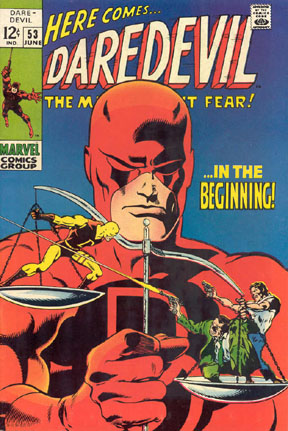
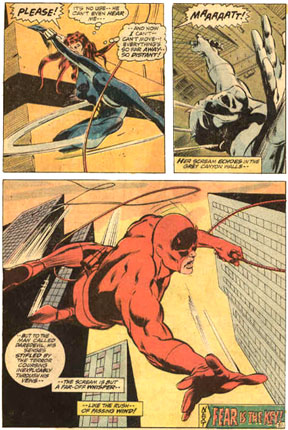
Gene Colan, influenced by film noir, brought a dark, moody atmosphere to the comic that made such dialogue completely inappropriate. Especially when inked later by George Klein, Syd Shores, and Tom Palmer (exceptional artists in their own right), Daredevil became an artistic treasure. Daredevil's alter ego Matt Murdock was the square-jawed leading man; girlfriends Karen Page and the Black Widow were the sexiest women in comics; and Daredevil himself, often emerging from those noir shadows, swooped through the city with the grace of an elegant dancer--swinging, spinning, twisting through the air.
Miller left Daredevil with issue 191 but came back with issue 227, this time doing only the writing in another classic series of stories called "Born Again." The artist was David Mazzucchelli, at the time fairly new to comics and barely known. But a look back at his issues (he'd been working on the book for a short while before Miller returned as writer) shows that he knew who to turn to for inspiration on the art. Mazzucchelli's art managed to capture some of the Colan flavor, and the look of the book again became a prize. Miller is a fine artist but an even better writer. Mazzucchelli, along with others--Wally Wood, Gil Kane, John Romita Jr., Joe Quesada, David Mack, and Barry Windsor-Smith, to name a few--have created memorable, and sometimes extraordinary, art for the character over the years. But the ultimate Daredevil artist will always be Gene Colan, whether the entertainment magazines think to mention him or not. JANUARY 22, 2003: Alias online guide finally available! Our long-promised Alias episode guide is finally online! This is the companion piece to our Spectrum 32 guide. Because we had only ten pages in that issue for Alias material, we had to pare down the plot summaries to leave room for the commentaries. If you need to brush up on the twists and turns of the first-season episodes, click here to read the online guide. If you want to read the commentaries, however, you'll still need to pick up a copy of the magazine itself. We gotta pay for this somehow! (For more information about Spectrum 32, click here.) And now that we finally got this Alias guide out of the way, perhaps we'll actually have time to put together a few mini-reviews of some of the current offerings, such as Joe Millionaire (we're hooked), Andy Richter Controls the Universe (we're still hooked), Angel (we're bored), Buffy (we're still astounded), and whatever else we can manage. OCTOBER 2, 2002: Alias and Buffy (again) Alias: Sept. 29: "The Enemy Walks In" Written by J.J. Abrams; Directed by Ken Olin We're wrapping up our Alias episode guide for Spectrum 32 (which--yes, we know--was scheduled for a September release). And yes, we like the show a lot. We like the combination of espionage Mission: Impossible plots with fantasy-oriented Rambadi prophesies and the like (a fusion of genres that is more seamless than Firefly's fusion of westerns and space fantasy). The series has generated critical acclaim but only a modest-sized audience. (Perhaps all the Emmy nominations and recent publicity will change that.) What's a little surprising about the second season premiere is that it doesn't significantly help new viewers understand the complicated basic story. It's structured in a way that suggests Abrams was attempting to make it easily accessible to first-timers. Sydney talks to psychologist Barnett, and the status of various characters are reviewed and brought up to date. But based on the information provided, the episode works better as a reminder to long-time viewers of what happened than as an introduction to potential new viewers. But hey, since we've been watching since the beginning, that's not a problem for us. Aside from that, it's more of the same--lots of action in exotic locations, fantastic escapes, a fast pace, and a minimum of personal-life stuff (does anyone really care that Francine is going to be opening a restaurant?). It was also refreshing that when Sydney's mom appeared, there was no heart-tugging, emotional mother/daughter reunion scene, but a reinforcement of just how nasty mom can be. In essense, Alias is a great comic book show, and that's why we love it. Buffy the Vampire Slayer - Oct. 1: "Beneath You" Written by Douglas Petrie; Directed by Nick Marck (Yes, we're going to write about Buffy again now.) Who is Douglas Petrie? This guy is an incredible writer. When compiling the Spectrum Super Special 1 covering the first five years of Buffy, we were surprised when our average ratings for Petrie's episodes equaled our ratings for Joss Whedon's. We don't know what the upcoming episodes are going to be like, but Beneath You suggests that our instincts were correct: everything is not going to be bright and happy this year on the show. Spike's torment at having received his soul is palpable, and the final three or four minutes--in which Buffy learns (some of) what has happened to him--is as good as anything in the show's six year history. (In season six Buffy underwent some psychological torment; perhaps this is Spike's year to be put through the psychological wringer.) The performances by Sarah Michelle Gellar and James Marsters are outstanding, and the final scene is unforgettable. Notably, it takes place in a church, and the horrifying closing moments are laden with symbolic import. This show is a work of art. (Can Gellar seriously be considering leaving this so that she can go make things like Scooby II?) Perhaps the backlash is on the way. Some critics still can't get past the name of the show, and even Entertainment Weekly's Ken Tucker--who praises the series--refers to its "lovingly critical scrutiny that everyone--from reviewers on deadline to poky academics--has lavished upon Buffy, simply because that supernatural tough-girl show is the sort of unbeatable feminist/pop-cult/po-mo combo that gets wordy types feeling all hot 'n' PC." (Oct. 4, #675/676, pp. 135-136) It's not the "feminist/pop-cult/po-mo combo" that has critics excited, but the show's ability to move beyond those clichés--in fact, those aspects of the series (more prominent in the early years) were often holding the show back; it wasn't until it broke out of them that it excelled. Case in point: the last few minutes of "Beneath You." Incredible! SEPTEMBER 29, 2002: Robbery Homicide Division and Hack pilots Robbery Homicide Division - Sept. 27: "A Life of Its Own" Written by Barry Schindel; Directed by Stephen Gyllenhaal Michael Mann executive produced this series. He also executive produced Miami Vice and Crime Story back in the eighties. Both were clever, innovative series. Robbery Homicide Division seems like every other cop show that's come along in recent years. A murder. A group of driven, serious detectives on the case. Solid acting, writing, and directing. There's nothing really wrong with this. But after watching Crime Story and, in the nineties, Homicide: Life on the Street (the best cop show ever, to our minds), all the rest of these shows seem bland by comparison. Maybe we'll keep watching RHD for a while just to see where it goes (it did, after all, take Crime Story a little time to find its footing), but we aren't going out of our way to see it. (By the way, it's also executive produced by Frank Spotnitz of The X-Files.) Hack - Sept. 27, 2002: Pilot Written by David Koepp; Directed by Thomas Carter In Entertainment Weekly 674 (September 27), Dalton Ross calls Hack "the funniest new offering of the season" that proves "the golden age of parody is upon us." The review is tongue-in-cheek; Hack is obviously not a parody. But it is rather absurd. A Philadelphia cop who got kicked off the force for stealing several thousand dollars of recovered money is working as a cab driver to make ends meet, but he still longs for that police action. So he helps various customers with their problems, whether it's a simple mugging or a runaway daughter who's become the sex slave of an Internet predator. To make viewers forget the blatant silliness, the show is beautifully photographed and features fine acting by David Morse (as the lead) and Andre Braugher (as his former partner). In fact, Braugher practically steals his scene, and it's great to see him back on a weekly show. (As much as we love him, even we couldn't make it through more than a few episodes of Gideon's Crossing.) Is all this enough to keep us coming back every week? Not really. The scripts need to get better, and believe it or not, the pilot does contain hints of several interesting themes that could be explored about vigilantism, moral relativism, and lost dreams. Will this happen? What do you think? The pilot was written by David Koepp, screenwriter of Spider-Man, The Panic Room, Jurassic Park, Mission: Impossible, and others, so obviously he's not going to be returning much (if at all). Our suggestion: see if James Yoshimura (of Homicide) is available. Hack needs someone good, and fast, because right now, despite all the flash, it's still just a goofy show about a cab driver who plays cop on the side. SEPTEMBER 26, 2002: Buffy and Smallville season premieres Buffy the Vampire Slayer - Sept. 24: "Lessons" Written by Joss Whedon; Directed by David Solomon By now it's become clear that our evaluation of Buffy's sixth season is at odds with many viewers, who found the year much too downbeat and depressing. The promise of a brighter seventh season has them excited: Robert Bianco wrote in Tuesday's USA Today that the series "is back, and it seems to have shaken off last season's torpor" with the "welcome return of a more upbeat tone." Maybe; let's wait and see. While Buffy's ordeal last season was wrenching, the Trio sporadically kept things funny. Already in the seventh season's first episode, ghost-like beings accost Buffy for not rescuing them when they were alive; the new high school has a creepy series of underground tunnels (undetected by Xander and his crew); and Spike seems to have become mentally unhinged. The final few moments--with a surprising collection of cameo appearances--is about as chilling as anything in previous years. So viewers expecting a "happy show" may be disappointed. There is no way that the characters can return to their carefree innocence of the early episodes and remain faithful to the direction of the series. Meanwhile, Giles works with healing Willow, who seems to be on the road to recovery despite being emotionally detached, even as she rambles on about Gaia and the interconnectedness of everything (her manipulation of foreign plant life is reminiscent of a memorable development from Alan Moore's acclaimed run on Swamp Thing in the eighties). Overall, while this season premiere doesn't have the pizzazz of last year's, it strikes just the right tone and appears to begin a new direction for the show--but probably not exactly the new direction many viewers were hoping for. Smallville - Sept. 24: "Vortex" Teleplay by Philip Levens; Story by Alfred Gough and Miles Millar; Directed by Greg Beeman There is something about this show that is completely addictive. It's not the writing itself, though that is usually solid; it's not the stories themselves, which have mostly been done before, and sometimes better; it's not the acting; it's not the look of the series; it's not the subtext of the struggles of a young man becoming an adult, because this series isn't really an allegory; and it's not even the power of the Superman mythos, because that aspect is downplayed. Perhaps this show is addictive because it effectively intertwines various elements into a cohesive whole that seemlessly moves from one to the next--adventure; romance; corporate intrigue; "middle-American" values; trust and duplicity in relationships; secrets; power; responsibility. It's all here, and presented without camp or condescension. In this exciting second season premiere, Clark begins to wonder if he has the power to fly; Lex and Lionel's difficult relationship survives one crisis, only to face another; Chloe is once again left out in the cold as Clark's bond with Lana grows, while his friendship with Lex is put to the test; and the spaceship seems to have a life of its own. Some disappointing moments--for instance, Nixon learns much of the truth about Clark, so of course his fate is set--are more than offset by extraordinary scenes such as the first death by Lex's hand. The first season of Smallville provided satisfying entertainment; we're expecting the second to be even better. SEPTEMBER 24, 2002: Firefly; John Doe We're going to try something new this fall. Because we have some spare time (yeah, right), we're going to try posting quick mini-reviews of some of the new shows and some season premieres of old favorites. These will not be detailed analyses, but quick first impressions. Check back every couple of days to see what's new! Firefly – Sept. 20: "The Train Job" Written by Joss Whedon and Tim Minear; Directed by Joss Whedon It’s been well-publicized that this episode is not the pilot. Fox decided that the two-hour pilot moved too slowly, so it was replaced on the schedule with this one. (Whedon had no choice but to go along with Fox’s decision, but clearly he was not persuaded; he insists that when released on DVD, Firefly will be in the proper order.) Nevertheless "The Train Job" does a good job of introducing the characters in this "space western," and we get the sense that the backstory has been well worked out. On the other hand, this show is just plain weird. Why are spaceships flying over Old West towns inhabited by cowboys? The episode begins with one of the most annoying SF film clichés—the voice-over explaining what viewers need to know about this new world—and there’s some sort of explanation about these planets being along the outer rim of civilization, or whatever, and apparently that's the reason everyone's dressed up as frontiermen. (We know that if we were to start up a colony on a distant galaxy, we'd try to design everything so that it looked like Gunsmoke....) There's nothing inherently wrong with combining space fantasy and westerns, but Firefly seems to be trying too hard to jam the two together instead of letting a story dictate the genre. Meanwhile, the central-totalitarian-government-versus-freedom-fighters story seems to be the plot of almost every futuristic SF series. Can Whedon and company say something new and interesting about this conflict? In fairness, the episode does put some new twists on a few western and space fantasy conventions. And we'll admit that we're holding this series to a higher standard because Whedon is in charge. "The Train Job" itself was okay, and we'll stick around for a while. (We're also intrigued that the Tick's Ben Edlund is credited as a producer.) John Doe – Sept. 20: Pilot Written by Brandon Camp & Mike Thompson; Directed by Mimi Leder This season's Strange Luck award goes to John Doe: an intriguing premise that doesn't really make any sense; a snazzy first episode; an interesting lead character; and a concept that may work better as a feature film than a continuing series. A naked man awakes on an island without knowledge of who he is or how he got there, but he seems to know everything about everything else. If this series becomes just an oddball cop show in which John helps solve difficult crimes—and there are hints that it will—then all sorts of better possibilities will be squandered. If, on the other hand, the producers have John's identity worked out themselves, along with the details of his situation (including why he sees everything in black-and-white except, it appears, people who have something to do with his identity), then the stories could move in a deliberate direction as John pieces together his history. With this as a foundation, the episodes could become mini-allegories about identity and purpose in the modern world. Knowing what usually happens on network television, we aren't holding out much hope that this will happen. But the pilot is still cool as a kind of bizarre existentialist fantasy. MAY 24, 2002: Spider-Man, Star Wars, X-Files, 24, Buffy For readers who can't wait for upcoming issues, here are some quick thoughts on some recent shows. NOTE: these are based on single viewings. Before publishing our final reviews, we will see each at least another time or two and could very well change our minds about some or all of this! Spider-Man: Ranks alongside the 1978 Superman movie, the 1989 Batman movie, and the X-Men movie as the best superhero comic book movies ever. The first hour, depicting the origin of Spider-Man, captures the essence of the character perfectly. Once the Green Goblin section begins, the movie isn't as successful but nevertheless has some great moments. (More about this will be coming in Spectrum 31.) Star Wars Episode II: Attack of the Clones: On first viewing, we prefer The Phantom Menace. Lest this sound like a cut, we'll remind readers that (unlike many of the critics) we liked The Phantom Menace a lot (despite Jar-Jar Binks). (See Spectrum 19 for our review.) The special effects in Episode II are breathtaking, and Hayden Christensen (especially) is quite good, but some other aspects of the movie didn't succeed as well. Which aspects? You'll find out in Spectrum 31 (along with, of course, more about all the stuff we really enjoyed). The X-Files Series Finale: Not bad, not great, but somewhere in the middle. The biggest problem is in the storytelling: the episode is mostly a series of characters sitting in a room telling the judges (and all of us viewers) what stuff meant from the past nine years. Whatever happened to the idea that it's better to show the story than to tell it? Unfortunately, the mythology had become so complex that Chris Carter may not have had any other choice. On the other hand, the basic idea of a trial for Mulder is pretty cool. We wish they would have done more with it, though. The metaphorical opportunities were just lying there waiting to be picked up, but none was. We'll have a lot more about this episode in Wrapped in Plastic 59 (June). 24: WIP and Spectrum co-editor John Thorne will argue as the day is long that this is one of the worst television shows ever. That's right, worst. He has lots of evidence, and he's enumerated much of it in an essay for WIP 59, which should be appearing the first week of July. Buffy the Vampire Slayer Season Finale: We've loved this season as a whole, believing that the geeky Trio guys, combining goofiness and danger, were the perfect follow-up to last year's battle against a god and Buffy's sacrifice to avert an apocalypse. Of the two-hour finale, the first hour, "Two To Go," was the better--a virtually perfect episode capped off by the dramatic return of Giles. "Grave" was a slight letdown, mainly because we're not sure we buy the explanation of how Willow's extreme power eventually tapped her into her own humanity. But hey, it might work for us on the second viewing. Our Buffy season six episode guide will be in the July Spectrum, issue 31. Yep, the same issue as Spider-Man and Star Wars. Is that going to be a great issue or what?! MARCH 28, 2002: TV Premises: Andy Richter; Baby Bob; 24 Sometimes television series start out fine and then falter because they are built on premises that cannot be sustained for the long haul. To remain fresh, they need to change, but if that alters the original idea too dramatically, the show becomes something else, possibly alienating the original viewers. So why don’t the writers plan ahead for this contingency? Because of the realities of network programming. The initial goal is to sell a pilot idea, then to get the pilot made, then to get picked up for a series. The competition is intense, and a clever pilot can make all the difference in the world. If it’s built on a premise that can’t be sustained--well, the writers can worry about that later, if the show even gets bought. (Perhaps the networks are the ones who should be considering the long-term feasibility of a show’s premise, but that seems to be the last thing on their minds, considering how many shows get canceled early in their runs.) If a show is lucky enough to get placed on the schedule, the initial order is usually for thirteen episodes. At this point, the writers need to work out the stories only for that many episodes. Why plan for a full season? Nowadays, if a show fails early in the ratings, it won’t make it to episode three. (Before the nineties, struggling shows were allowed to stay around long enough to find an audience. Hard as it is to imagine now, All in the Family and Monday Night Football, just to pick two examples, did not begin as top-ten hits.) If a show is lucky, it will get renewed for the "back nine"--episodes fourteen through twenty-two--to finish out the season. But a show’s producers won’t know until well into production whether to begin planning for these additional episodes. Usually--but not always--once a show makes it past its freshman season, it gets renewed (or not) for a full twenty-two episodes. All this brings us to three shows: Andy Richter Controls the Universe, Baby Bob, and 24. As we’ve written, Andy Richter is quite enjoyable. But even in the pilot, we wondered, how long can this premise sustain itself? How quickly will the audience tire of essentially the same kind of joke (Andy’s elaborate fantasy life) repeatedly played out? Wouldn’t this work better as a feature film? Have the writers worked out what the show will be like by episode thirteen? Episode twenty-two? But if the fantasy sequences are toned down, the series becomes just another office sitcom (ugh). And then there’s Baby Bob. Okay, so we haven’t seen the show--any series whose feature character is a baby (talking or not) is not for us--but if the commercials (and David Letterman’s jokes) even partly depict the series accurately, some immediate questions come to mind. What if the show’s a hit? What if it lasts a few years? Do they allow the baby to age? Doesn’t this undercut the premise? "Look, it’s a five-year-old, and he’s talking!" Doesn’t have the same impact, does it? (A more startling scenario at this point would be, "Look, it’s a five-year-old, and he’s not talking!") So what can the writers do? Do they age the family but bring in a new talking baby every two or three years? (“Look, it’s your new sister, baby Betty!”) Or do they replace baby Bob every year with a new “actor”? Wouldn’t this be weird? Everyone else in the family would age except the baby (the one person whose aging would be most noticeable)! Then again, maybe this does make sense. The kid must be some sort of genetic mutant and a future member of the X-Men (or it’s poorer cousin, Mutant X) if he ever does manage to reach his teenage years. And what about 24? Here the writers were clearly caught in a bind. Fox guaranteed them only thirteen episodes. So should they have planned to resolve the major conflicts in hour thirteen or hour twenty-four? If the latter, and the show got canceled at episode thirteen, lots of viewers would go away angry at the series and the network. If the former, and the show stayed around, why would anyone need to watch the last eleven episodes? As it turned out, the major storylines essentially got resolved in episode thirteen; then the show had to start over, in a way. A more accurate title for the series would have been 13 and 11. It’s hard to criticize the writers and producers too much. Because of the lack of network support they get, they understandably don’t want to put in too much work on episodes that may never air. And it’s not like a show with a short-term premise can’t go on for years. Consider The X-Files. By the second season, or certainly the third, it seriously needed to re-invent itself. Instead, it stayed with the original successful formula for many years: Scully was the skeptic, Mulder the believer. And no one (outside of Spectrum, it seemed) appeared to be bothered by this. So maybe baby Bob can, after all, remain in a specially sealed time portal, oblivious to aging, watching friends and family grow old and die while he remains an infant. Maybe the show isn’t really a comedy after all, but a horror series. MARCH 25, 2002: Andy Richter Controls the Universe; Celebrity Boxing Andy Richter is doomed. The former Conan O'Brien sidekick is trapped in a funny, clever, enjoyable sitcom, Andy Richter Controls the Universe, that is getting good critical notices. The last Fox show to meet these criteria, The Tick, lasted just eight episodes. (Reportedly a ninth was shot but has not aired.) Richter's show is more mainstream than The Tick, but it's also quirky enough that it may not be long for this world. Our suggestion: catch it quickly while you have the chance. Richter plays "Andy," a struggling short story writer currently employed writing dull technical manuals. His fantasy life is colorful, to say the least, whether it's imagining receptionist Wendy, on whom he has a crush, crawling into bed with him, or concocting a scenario in which he and his fellow workers are the Mighty Morphin' Power Rangers saving the world. While much of the humor in the March 19 pilot episode is based on standard office struggles and situations (thus giving the show a slight chance to survive, despite its quirkiness), it's punctuated with (thankfully subtle) social jabs and observations, such as good-looking co-worker Keith, who, according to Andy, simply has good fortune fall his way, as it must for all the world's beautiful people. In one hilarious scene, another co-worker hands Keith an envelope stuffed with bills, explaining that the office took up a collection just for the heck of it and thought that Keith should get the money. Receptionist Wendy, by the way, is played by Irene Molloy, who starred in the funny, clever, enjoyable WB sitcom Grosse Pointe, which also got strong critical reviews but lasted merely one season. (Even a guest appearance by Sarah Michelle Gellar couldn't save the series.) It's just another hint of the dark clouds hanging over Richter's show. This oddball experience, a wonderful excursion into the process and nature of creativity itself, will probably have to be toned down (made less weird) in order to garner a spot on the fall schedule. In the meantime, we recommend that you check it out. We don't often recommend sitcoms (American ones, anyway), but this is one we look forward to. Finally, speaking of surreal television: yes, of course we watched Fox's Celebrity Boxing. Couldn't wait, actually. Only the Todd Bridges/Vanilla Ice match turned out to be anything close to a fight, but that's really beside the point, isn't it? The Tanya Harding/Paula Jones contest was as strange as anything on Twin Peaks, with Jones literally trying to flee Harding by the second round. Will we watch the inevitable Celebrity Boxing II? Probably not. Does the whole idea represent some sort of new cultural low for the country? Are you kidding? Sally Jesse Raphael is still on the air (barely). Blind Date and The 5th Wheel and Elimidate and Change of Heart fill the airwaves at night. Celebrity Boxing is practically a work of art. Now we don't have time to talk about Buffy's astonishing March 12 episode, "Normal Again." Actually, we really want to watch it again and think about it some more before putting anything to paper (or computer screen, or whatever). Maybe soon.... FEBRUARY 27, 2002: Kevin Smith Just over a week ago we learned about the death of actor Kevin Smith. Although we did not know him personally and saw only his Xena and Hercules work, we felt a considerable sadness upon hearing the news. Perhaps it was because we had always thought that his talent deserved wider recognition in the U.S. than it received--no doubt in part because he did not want to move to L.A., but preferred to remain in New Zealand. Or perhaps we were affected because he seemed like such a pleasant guy whose personality came across not only in his role as Ares, but in our one conversation with him in February 2001 for our Spectrum 26 interview. In going back and re-reading that interview, a couple of passages seem eerie in light of Smith's early death. When half-jokingly asked about the possibility of a Xena TV movie fifteen years down the road when current fans are feeling nostalgic, he joked: "Xena: The Telemovie. Yeah, yeah. [Laughter] And I'll be like three hundred fifty pounds, trying to squeeze back into my Ares costume, trying to heave my man-breasts back into it! [Laughter] Ares is bald, he's on a cane--people want to see that!" Even creepier is a section near the end of the long interview in which we asked him if he had any interest in directing, or if he thought that the extra work of trying to direct while acting might drive him crazy. He said, "Ah, fully, bro. I think when you come to Earth, you're allotted exactly--I mean a precise number of heartbeats. Don't use up any more than you have to! [Laughter] You're banging around in there; you're wasting them, man!...This is probably one of the last interviews that will be published....[Working on Xena and Hercules] has been a great ride for me, and if there's any way of conveying my thanks to people for embracing the show--even for those people that hate Ares!--thanks!" We will have more on Kevin Smith in Spectrum 30. JANUARY 25, 2002: Film/television index During the past decade or so that we have been producing Spectrum and Wrapped in Plastic, we have reviewed many, many films and television programs. Sure, everybody knows that we write about Buffy and Xena and The X-Files and Twin Peaks, but we've also written about TV shows such as Northern Exposure, Oz, The Chris Isaak Show, The Simpsons, Early Edition, Hill Street Blues, Red Show Diaries, Bakersfield, P.D., and numerous others! We've also reviewed lots of films--The Truman Show, Dark City, The Thin Red Line, Boogie Nights, River's Edge, Tetsuo, Edward Scissorhands, Cruel Intentions, Picnic at Hanging Rock, The Whole Wide World, and countless others! Well, not countless, because we went and counted them! What's more, we listed them in alphabetical order and added that information to our Web site! Click on over to our Index and check to see if we've written about your favorite movies or shows, or interviewed your favorite actors. The chances are good that there are some articles hidden away in our various magazines that you'd love to read! JANUARY 8, 2002: Buffy/Angel Magazine Page We finally got around to inventorying our Buffy and Angel magazines--most of them, anyway--and have added them to our online store! Click here to check out the selection. Some of these magazines are in very low supply, however, so don't wait long if you see something you want! Next up, we'll probably add a selection of early Win-Mill Productions comic book-related publications. Or maybe Xena mags. One or the other. OCTOBER 8, 2001: Angelica Bridges It seems like we've been seeing the name Angelica Bridges popping up more and more over the past few months. It occurred to us that she appeared in an episode of the Conan syndicated show in 1998, and we wrote a review for Spectrum 13. Because that issue has been out of print for years, we have posted our Conan review on our Spectrum store site in the "back issues" section. Check it out! It's one of the reviews we are most pleased with. (In retrospect, it's no wonder issue 13 sold out so quickly. It contains an episode guide for the first season of Buffy; a great interview with Shaun Cassidy covering American Gothic and Roar; a Kevin Sorbo/Lucy Lawless update; and a Lee Sandlin column! By the way, one of these days we'll get some excerpts from the Cassidy interview up on the site.) |